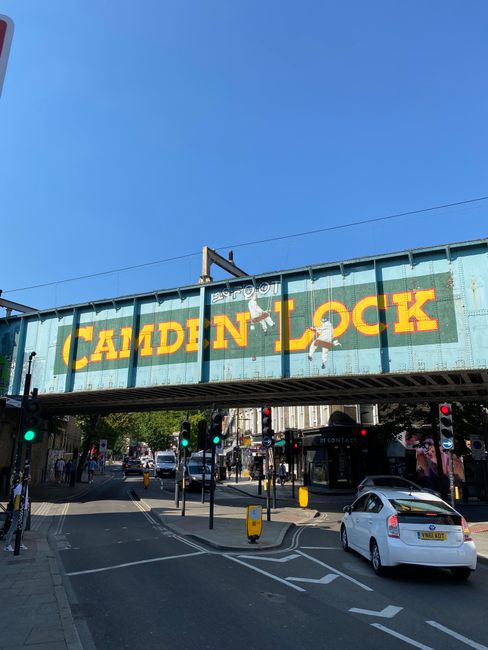
Rubbish clearance near Camden Market and Camden Lock: a practical local guide
If you need rubbish clearance near Camden Market and Camden Lock, chances are you want it sorted quickly, properly, and without turning a busy day in Camden into a logistical headache. Maybe you're clearing a flat above a shop, maybe you've got trade waste after a refit, or maybe you're just staring at a pile of furniture, bags, and mixed junk thinking, where on earth do I start?
That's exactly what this guide is for. We'll walk through how local rubbish clearance works, what it is best used for, how to choose the right approach, and the common mistakes that can cost time, money, or a fair bit of stress. We'll also cover what matters around access, safety, recycling, and compliance in a busy part of London where pavements are narrow, parking is tight, and timing really matters. To be fair, Camden does not exactly make waste disposal effortless.
By the end, you'll know how to plan a clearance that is efficient, sensible, and as disruption-free as possible.
Why rubbish clearance near Camden Market and Camden Lock matters
Camden Market and Camden Lock sit in one of the busiest, most distinctive parts of north London. The area is lively, crowded, and full of mixed-use buildings, retail units, eateries, studios, and flats. That creates a very specific rubbish-clearance challenge: waste often needs to be removed in a way that is fast, tidy, and respectful of the surrounding footfall.
In practical terms, poor waste handling near Camden can mean blocked access, unpleasant smells, cluttered shared areas, and a real nuisance for neighbours or customers. If waste sits too long, it also tends to grow legs. Not literally, obviously. But one bag becomes three, and suddenly the pile looks twice as bad as it did yesterday.
For businesses, rubbish clearance is also about keeping the premises presentable and safe. For residents, it's about reclaiming space and avoiding the pressure of living around clutter. And for landlords or managing agents, it can be the difference between a simple turnover and a messy handover.
The local context matters too. Camden streets can be awkward for large vehicles, and access around market areas may be limited at certain times. That means planning ahead is not just helpful, it is usually the difference between a smooth collection and a frustrating one.
If the job includes a broader declutter or a full property reset, services like home clearance, flat clearance, or house clearance may be more suitable than a simple one-off lift. The right service depends on what needs shifting and how much needs to go.
How rubbish clearance near Camden Market and Camden Lock works
Most rubbish clearance jobs follow a similar pattern: you explain what needs removing, the team assesses volume and access, a time is agreed, and the waste is collected and loaded for disposal or recycling. Simple enough on paper. In real life, the details matter.
In an area like Camden, access is often the biggest issue. A clearance team may need to think about stairs, narrow roads, loading restrictions, lift access, or whether the collection has to be timed around the market's busiest periods. That's why a proper description of the job helps far more than a vague "quite a lot of stuff, sorry".
For smaller clearances, a same-day or next-day visit may be enough. For larger jobs, such as moving old furniture, builders' debris, or mixed bulky items, the team may need more time and more than one crew member. A realistic estimate is important because overfilling a vehicle, or underestimating the load, leads to delay and extra handling.
Depending on the waste type, the process may also involve sorting. Reusable items can sometimes be separated from general waste, while appliances, mattresses, or confidential material may need special handling. If you are clearing offices or workspaces, office clearance and confidential shredding are worth considering so paper records and business items are treated appropriately.
One thing people often overlook is the difference between rubbish removal and skip-based disposal. A skip can work well for ongoing projects, but in a busy Camden setting, it is not always the easiest option. If you want to understand what fits inside a skip before deciding, see what can go in a skip.
Key benefits and practical advantages
The main benefit is obvious: you get your space back. But the real value goes beyond that. A good rubbish clearance service can reduce stress, save time, and remove the sort of awkward heavy lifting that usually ends with a sore back and a bad mood.
Here are the practical upsides that matter most:
- Speed: Useful when you need a flat, shop, or yard cleared quickly.
- Convenience: No need to hire a vehicle, recruit helpers, or make multiple trips.
- Better presentation: Especially important near a busy retail and visitor area.
- Less disruption: A planned clearance can be carried out with minimal impact on neighbours or customers.
- Responsible handling: Recyclable and reusable items can often be separated more effectively.
- Reduced physical strain: Heavy furniture, white goods, and awkward loads are handled for you.
Another advantage is flexibility. You may need a single-item pickup today, or a multi-room clearance later in the week. For example, if the job starts as "just a couple of old sofas" and ends with a fridge, bags, and some garden waste, a broad waste collection approach can be more efficient than trying to piece everything together separately. Services such as furniture clearance, fridge and appliance removal, and garden clearance can all fit into a wider plan.
Expert summary: In Camden, the best rubbish clearance jobs are usually the ones planned around access first, waste type second, and speed third. If you get those three things right, everything else tends to follow more smoothly.
Who this is for and when it makes sense
This kind of service is useful for more people than you might think. It is not only for major renovations or full house moves. In fact, many local clearances are fairly ordinary life-admin jobs that have simply grown too big to handle alone.
You may need rubbish clearance near Camden Market and Camden Lock if you are:
- moving out of a flat and need bulky items removed
- clearing a rental property between tenancies
- removing old furniture, mattresses, or appliances
- getting rid of builders' debris after a refurb
- emptying a loft, garage, or storage space
- closing or refreshing a business unit
- sorting mixed waste from a home declutter
It also makes sense if the waste is awkward. Think wardrobe carcasses, broken shelving, bagged clutter from years of "I'll deal with that later", or the remains of a DIY project that looked easier on YouTube. We've all been there, or close enough.
For domestic jobs, loft clearance and garage clearance are often where people start, because those spaces tend to collect everything from old suitcases to broken exercise gear. For business settings, business waste removal can be a better fit when stock, packaging, fixtures, or mixed operational waste needs shifting.
Step-by-step guidance
A clear process makes the whole thing easier. If you're arranging a clearance in or around Camden Market and Camden Lock, this is the sequence that usually keeps things calm and efficient.
- List what needs to go. Include bulky items, bags, loose waste, appliances, and anything that might need special handling.
- Take a quick look at access. Stairs, lifts, parking, loading bays, and entry codes all matter.
- Separate obvious categories. Furniture, electricals, general rubbish, and hazardous items should not be mixed blindly.
- Ask for a clear quote. Good pricing should reflect the volume, labour, and type of waste involved.
- Prepare the area. Move small items out of the way, clear paths, and make sure pets, children, or customers won't be in the way.
- Confirm timing. In Camden, timing can be crucial. A slightly earlier or later slot may make all the difference.
- Check what happens after collection. Reuse, recycling, and lawful disposal should all be part of the service.
Here's a tiny but important tip: if you can photograph the waste pile before booking, do it. Not for drama. Just for clarity. A few pictures can save a lot of back-and-forth, especially when the load includes a mix of furniture, bags, and smaller loose items.
If you're dealing with a larger property cleanup, house clearance or home clearance may be the better route because they are designed for broader, room-by-room jobs rather than one isolated pile.
Expert tips for better results
Small decisions make a big difference. In busy local areas, good preparation is often worth more than brute force.
- Keep the route open. Clear hallways and stairwells before the team arrives.
- Label unusual items. If something is fragile, sharp, or especially heavy, say so upfront.
- Don't bury special waste. Batteries, paint, chemicals, and sharp objects should not be hidden in mixed bags.
- Plan around neighbours and customers. A quieter collection window can save awkwardness.
- Use the right service for the right waste. Furniture, appliances, garden waste, and builders' debris each have their own practical quirks.
One of the most useful habits is simply to sort what can be reused. A decent clearance team will usually separate items for recycling or reuse where possible. That is better for the environment, of course, but it also makes the job feel cleaner and more thoughtful. It is a little thing, yet it matters.
If the job includes old sofas or mattresses, consider specialised handling through mattress and sofa disposal. Those items can be awkward, heavy, and not especially pleasant to leave sitting around for long.
And if you are clearing after building work, builders waste clearance is the more suitable option than a generic clearance. Dust, rubble, timber offcuts, and mixed renovation waste are a different beast entirely.
Common mistakes to avoid
A lot of clearance problems are avoidable. Honestly, most of them come down to poor planning or vague communication.
- Underestimating volume: What looks like "a few items" often turns into a much larger load.
- Ignoring access issues: Narrow stairs, no parking, and restricted loading can change everything.
- Mixing all waste together: Hazardous or specialist items should be declared early.
- Leaving it until the last minute: That creates pressure and often reduces your options.
- Choosing on price alone: The cheapest quote is not always the best if it hides extra labour or poor handling.
- Forgetting about recycling: Throwing everything into one pile is easy, but not always sensible.
A quieter mistake is not checking how the team handles furniture, appliances, or confidential waste. If your clearance includes office paper, records, or computer-related clutter, ask about confidential shredding rather than assuming everything will be treated as ordinary rubbish.
And yes, it is easy to think, "I'll sort that later." Later has a funny way of becoming next month.
Tools, resources and recommendations
You do not need special equipment for a basic clearance, but a few practical tools can make things much easier.
- Boxes or sacks: Good for loose smaller items and sorting by room or category.
- Markers or labels: Useful when separating furniture, general waste, and items to keep.
- Gloves: Sensible for dusty lofts, garages, or mixed waste.
- Flat-surface trolleys: Helpful for heavier items if your building access allows it.
- Photos on your phone: Probably the most underrated tool of all for quick quoting.
On the service side, useful supporting pages can help you plan the right kind of clearance. For example, furniture disposal is helpful when you are replacing worn-out pieces, while waste removal is useful for broader mixed loads. For commercial premises, office clearance is often the cleaner route than trying to improvise a one-off move.
If your job involves service standards and trust, these pages are worth a look too: pricing and quotes, payment and security, and insurance and safety. They help set expectations before anyone turns up at the door.
Law, compliance, standards, and best practice
Waste handling in the UK is not something to treat casually. Even for straightforward domestic jobs, it is best practice to use a provider that understands proper disposal routes, duty of care, and safe handling of different waste types.
You do not need to memorise legislation to make a good decision, but you should expect a few basic standards:
- waste is collected and transported responsibly
- reusable and recyclable items are separated where possible
- hazardous items are handled with care and not dumped into general loads
- workers use safe lifting and loading practices
- collections do not create unnecessary disruption or risk
For larger or more complex waste, extra caution is sensible. Items like chemicals, some electricals, and anything you are unsure about should be flagged early. If a provider cannot explain how they deal with awkward waste, that is a small warning sign. Nothing dramatic. Just a sign to keep asking questions.
Environmental good practice matters too. A clear recycling approach, supported by recycling and sustainability, is a good indicator that the service is thinking beyond simple carting-away. That is especially relevant in a place like Camden where customers, tenants, and businesses are often very aware of environmental standards.
If you are clearing business premises, it is also sensible to check the company's general policies and trust signals, such as health and safety policy and about us, so you know who you are dealing with and how they operate.
Options, methods, or comparison table
There is more than one way to get rid of rubbish near Camden Market and Camden Lock. The best choice depends on access, volume, timing, and the type of waste you have.
| Method | Best for | Pros | Limitations |
|---|---|---|---|
| Man-and-van style clearance | Mixed rubbish, furniture, awkward access, quick removals | Flexible, fast, often easier in tight streets | May need careful scheduling for larger loads |
| Skip-based disposal | Longer projects with ongoing waste | Handy if waste is generated over time | Can be awkward where space and permits are issues |
| Specialist item removal | Appliances, sofas, mattresses, confidential waste | Better handling of specific items | Not ideal for mixed or full-property clearances |
| Full property clearance | Flats, houses, voids, end-of-tenancy jobs | Comprehensive and efficient | Needs a clearer inventory and access plan |
In many Camden scenarios, a manual collection service is simply the most practical. Streets are busy, access can be fiddly, and speed matters. That said, if you are already doing a staged renovation, a skip may still be useful. The point is not to choose the fanciest option. The point is to choose the one that actually fits the job.
Case study or real-world example
Picture a small flat a short walk from Camden Lock. The resident is moving out after years of collecting "useful" stuff that turned out not to be useful at all. There is a broken wardrobe, two bags of mixed clutter, an old desk chair, a mattress, and a fridge that nobody wants to deal with. Classic.
Rather than trying to make six separate disposal arrangements, the practical route is to group the job into one planned clearance. Furniture is identified first, the appliance is flagged separately, and the route out of the building is checked before anyone starts lifting. Because the building has narrow stairs and no easy loading bay, the team times the visit to avoid peak pedestrian traffic.
The result is simple: the flat is cleared in one visit, the hallway is left tidy, and the waste is handled in a way that separates recyclable material from general rubbish. The resident gets a clean handover, and the building avoids the lingering mess that so often happens when people try to manage everything in bits and pieces.
That is the basic formula, really. Good timing, clear information, and the right service for the waste type. Not glamorous, but it works.
Practical checklist
Use this checklist before booking rubbish clearance near Camden Market and Camden Lock.
- List every item or bag that needs removal
- Separate furniture, appliances, and special waste
- Check stairs, lifts, parking, and loading access
- Take a few photos of the waste pile
- Decide whether it is a single-room, full-property, or mixed clearance
- Move small valuables and documents out of the area
- Confirm the collection time and any entry instructions
- Ask how recycling, reuse, and disposal are handled
- Flag anything heavy, sharp, or hazardous
- Make sure pets, children, or customers will not get in the way
Quick takeaway: the better your prep, the smoother the clearance. It really is that simple, even if the job itself feels a bit messy at first.
Get a free quote today and see how much you can save.
Conclusion
Rubbish clearance near Camden Market and Camden Lock is all about making a busy, high-footfall area feel manageable again. Whether you are clearing a flat, a shop, an office, or a mixed pile of unwanted items, the best results come from clear communication, sensible timing, and a service that understands the realities of working in central Camden.
The main thing to remember is this: do not wait until the clutter becomes a crisis. A well-planned clearance is easier, safer, and often far less stressful than people expect. And once the space is clear, the difference is immediate. You notice it in the light, in the silence, in the room simply breathing again.
If you are ready to sort it properly, make the next step a straightforward one. A good clearance should leave you lighter, not more worn out. That is the whole point, after all.
Frequently Asked Questions
What counts as rubbish clearance near Camden Market and Camden Lock?
It usually means collecting and removing unwanted household, commercial, or mixed waste from the Camden Market and Camden Lock area. That can include furniture, bagged rubbish, appliances, office items, and renovation debris.
Is this suitable for flats with awkward access?
Yes. In fact, that is one of the main reasons people choose a clearance service. Narrow staircases, upper-floor flats, and limited parking are all common in Camden, so access planning is a normal part of the job.
Can I get rid of old furniture and appliances in one go?
Often, yes. Many clearances combine furniture, white goods, and general rubbish in a single visit. It helps to separate items in advance so the team can load and sort them more efficiently.
What if I only have a few bulky items?
That still makes sense. A couple of sofas, a mattress, or an old fridge can be awkward enough to justify a professional pickup, especially if you do not have transport or suitable lifting help.
Do I need to sort the rubbish before collection?
A little sorting helps, but you do not need to make everything perfect. Grouping obvious categories such as furniture, appliances, and loose bags is usually enough. If you have special waste, flag it clearly.
How do I know whether I need waste removal or a full property clearance?
If you are removing a few items or a mixed pile, waste removal may be enough. If you are clearing several rooms, an empty flat, a house, or a larger commercial space, a fuller clearance service is usually the better fit.
What should I do with confidential papers or records?
Do not put them into ordinary mixed waste. If there is any chance the material contains personal or business-sensitive information, use a service that offers confidential shredding.
Can rubbish clearance include builders' waste?
Yes, though builders' waste is best handled through a service designed for heavier and messier material. Dust, rubble, timber, and renovation offcuts are not the same as domestic clutter.
Is recycling usually part of the service?
It should be, where practical. A responsible provider will aim to separate reusable and recyclable items rather than sending everything to general disposal without thought.
How far in advance should I book?
If the job is simple, you may be able to arrange it quickly. For larger clearances, or for collections that depend on timing, access, or business opening hours, booking a little earlier is usually wiser.
What makes Camden clearance jobs trickier than average?
Mostly access and timing. Busy streets, limited stopping space, pedestrian traffic, and shared buildings can all make a straightforward job feel more complex than it looks on paper.
Where can I learn more about the company before booking?
You can review practical pages such as about us, pricing and quotes, and insurance and safety to understand how the service is structured and what standards to expect.